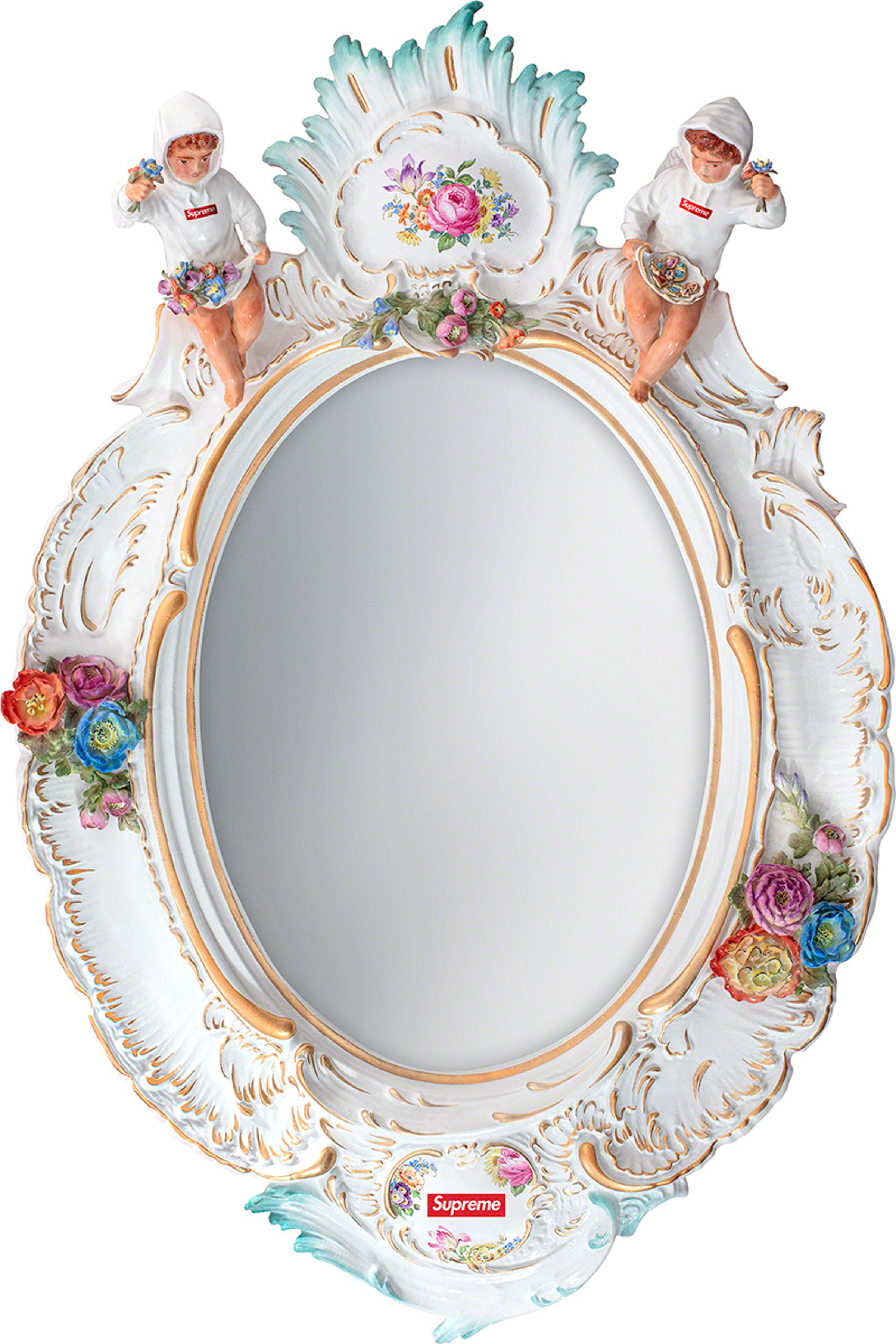
Supreme x Meissen Hand-Painted Porcelain Cupid Figurine
The original behind the Supreme x Meissen Hand-Painted Porcelain Cupid Figurine is the Meissen Porcelain Cupid Figurine — $6769 retail; Supreme charged $3998.
Supreme vs. Original
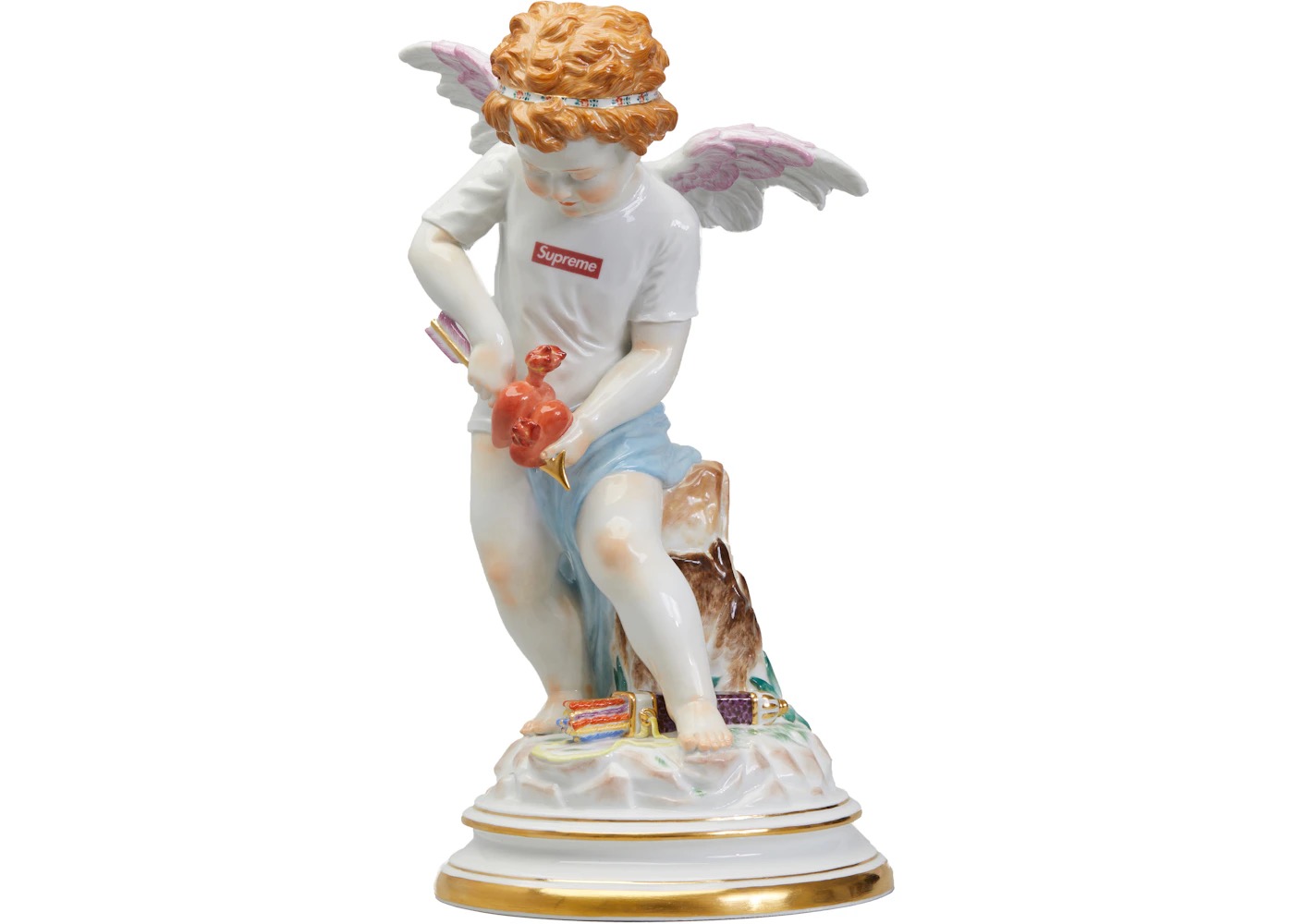
Supreme version
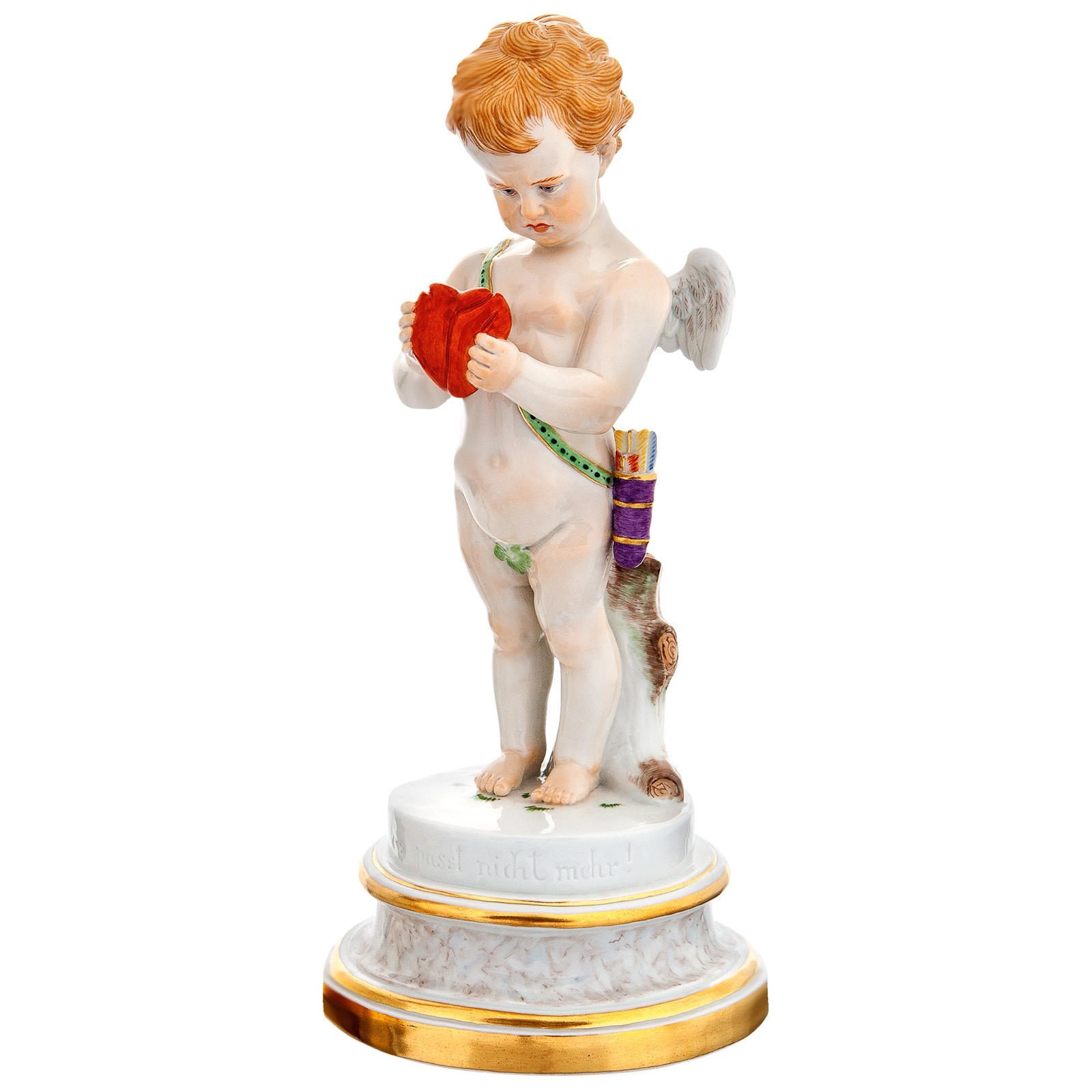
Original — Meissen
Porcelain Cupid Figurine
About the original
Meissen Porcelain was founded in 1710 in Saxony, Germany, as the first hard-paste porcelain manufacturer in Europe after Johann Friedrich Böttger replicated the Chinese porcelain formula for Augustus the Strong. The factory still operates in Meissen and marks every piece with its crossed-swords signature, a trademark in continuous use since 1722. Cupid and putti figurines have been part of the Meissen catalog since the 18th century, modeled, cast, fired, and hand-painted individually in the original workshops. Supreme's SS19 figurine is a hand-painted porcelain cupid produced in those workshops to the same standards as Meissen's house catalog, retailing at $3,998 against $4,500 for a comparable Meissen original.
About Meissen
Meissen is the oldest European porcelain manufacturer, established in 1710 in Meissen, Saxony under Augustus the Strong, Elector of Saxony and King of Poland. Alchemist Johann Friedrich Böttger, working from earlier experiments by Ehrenfried Walther von Tschirnhaus, produced the first European hard-paste porcelain at Albrechtsburg castle. Meissen introduced its crossed swords mark in 1722, one of the earliest trademarks in continuous use. Its hand-painted figurines, tableware, and decorative objects are still produced in Meissen by master painters and modelers trained through multi-year apprenticeships. Supreme's collaboration placed streetwear iconography on pieces from a 300-year-old state-founded manufactory.
Price comparison
| Supreme retail | $3998 |
|---|---|
| Meissen retail | $6769 |
| Hype tax | Below original retail |
Questions
Is the Supreme x Meissen Hand-Painted Porcelain Cupid Figurine just the regular Porcelain Cupid Figurine?
The Supreme x Meissen Hand-Painted Porcelain Cupid Figurine, released in Spring/Summer 2019, is based on the Meissen Porcelain Cupid Figurine. Supreme sometimes changes the colorway or materials, and the description on this page covers the original's specs and any differences. If you want the product without the box logo, the Meissen Porcelain Cupid Figurine is the one to buy.
Is the Meissen Porcelain Cupid Figurine cheaper than the Supreme version?
No — Supreme priced this one below the original's retail. The Supreme x Meissen Hand-Painted Porcelain Cupid Figurine sold for $3998 on drop day, and the Meissen Porcelain Cupid Figurine lists at $6769. Supreme's price lasted as long as the drop did. The original sells at its regular price any day.
Where can I buy the Meissen Porcelain Cupid Figurine?
You can buy the Meissen Porcelain Cupid Figurine direct from Meissen. Retail price is $6769. The buy links on this page go straight to the product listing at each retailer.